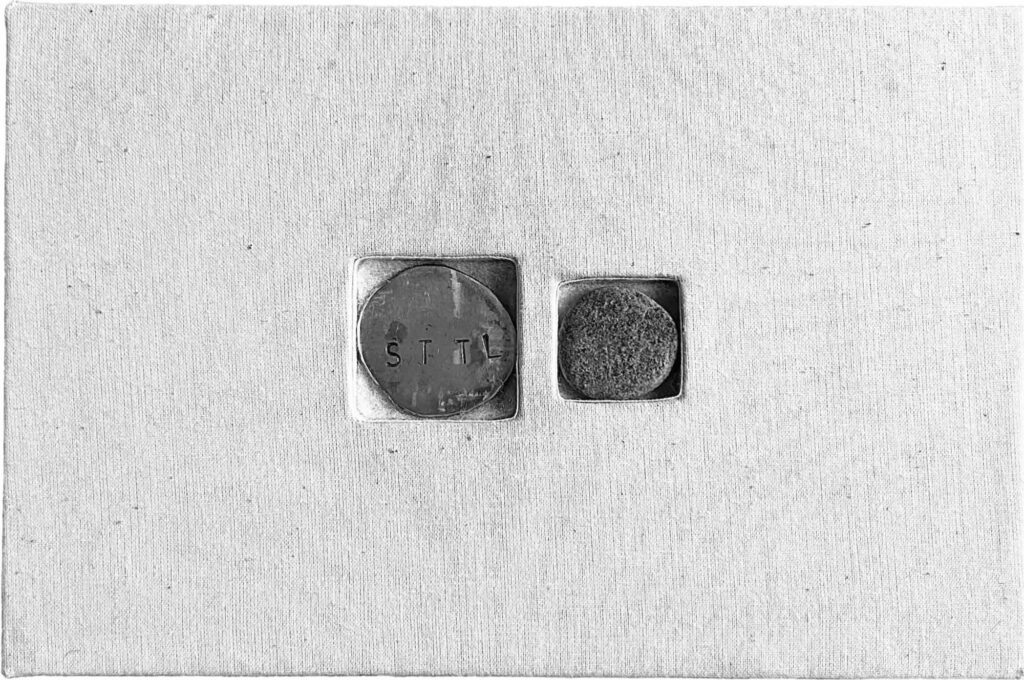
Margaret Sheehan-Gray, cardboard, calico, mohair, 2025, 15 x 23 x 7 cms
Between sleeps he is writing letters to each of us and damning the new tendency for his pen to slip through his fingers.
Even my blasted hands have lost their grooves,
and his daughters jump to extract from every corner of the home an array of stones, each pebble turned pumice to give grip back.
__
Unearthed and hoisted from their tumbled bellies, three Roman tombstones line the back wall of a museum in Portugal. Dragging my eyes across their softened stone, I read the chiselled tear of an inscription that spells the letters STTL, and an information panel fills the blanks: Sit Tibi Terra Levis, or May the Earth be Light to You. Unlike the slumbering proclamation of other ancient epitaphs (Here She Rests, Rest in Peace), May the Earth be Light to You bears the weight of experience. It is corpse-shaking well-wishing, an appeal that breaks death open. Out steps life, resisting chronology, asking, how was it for you?
The line comes from the Athenian tragedy Alkestis, a play by Euripides about the slippery tricks of a king who is afraid of dying. Adorning his doting wife with the burden of sacrifice, King Admetus bargains with the gods, resisting death. My dad resisted death with a stone spinning between his palms, a thick sheet of card pulled across his lap to lean letter writing. A different type of trade, he wished to give what he had lived to someone else, to pass on the lucky excitement that he was dealt. I write of him too, but what I learn, and as did Admetus, is that words are not enough.
Softness, memory, a grip of it.
May the Earth be Light for You.
Later, as the gap between inhale and exhale swells, I wish to strike a bargain and for the coin in your mouth to send spit hurling across the room. For you to sit up, wipe the Vaseline from your nose and laugh at the sponge we are using to paint water onto your lips.